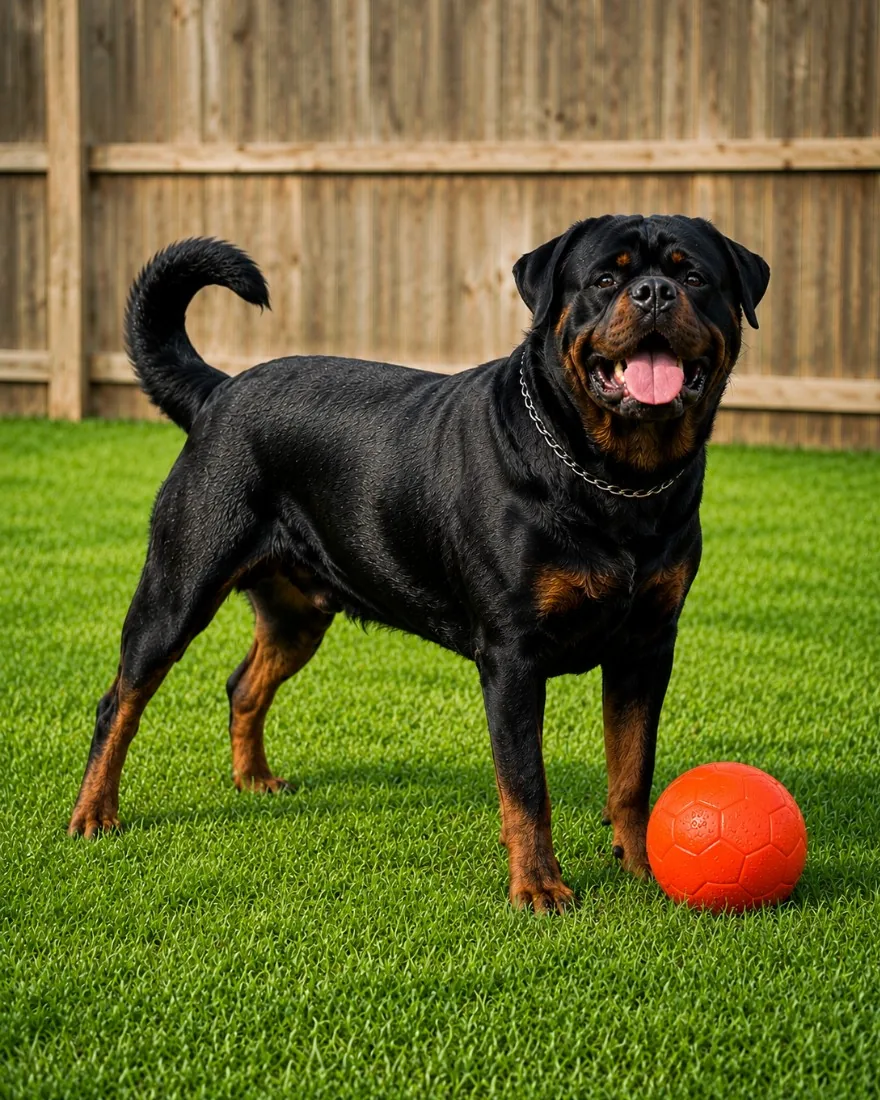
The Rottweiler is one of the most recognized dogs in the world — and one of the most misunderstood. To understand the dog in front of you, it helps to understand where the breed came from and what it was built to be. This is Part I of our breed series: the origins, the purpose, and the true character of the Rottweiler.
Bred by Rome, refined in Rottweil
The Rottweiler's ancestors were the drover dogs of the Roman legions — powerful, weather-hardy animals that moved with the army across the Alps, herding and guarding the cattle that fed the troops. When the Romans settled in what is now southern Germany, those dogs stayed and worked.
In the cattle-trading town of Rottweil, they became indispensable. They droved herds to market, pulled the butchers' carts, and guarded the day's earnings — famously carrying the money purse around their necks for safekeeping. That role earned the breed its old name: the Rottweiler Metzgerhund, the "butcher's dog of Rottweil."
A working breed to the core
Everything about the Rottweiler traces back to work. It was bred for the intelligence to make decisions on its own, the strength and endurance to move stock and haul loads, and the steady, biddable nature to partner closely with people. When cattle droving declined in the 1800s, the breed nearly vanished — then found new purpose in police, military, search-and-rescue, and service work, where it still excels today.
This history matters because of what it tells us: the Rottweiler was never bred for aggression. It was bred for capability, courage, and partnership. Those are very different things.
The true Rottweiler temperament
A correctly bred Rottweiler is confident, calm, and self-assured — never nervous, never sharp. It is deeply loyal and devoted to its family, discerning with strangers (watchful and a little aloof, but stable), and brave without being reactive. The breed standard describes the ideal as good-natured, placid, devoted, and obedient.
That character isn't an accident, and it isn't guaranteed by the breed alone. Temperament is inherited and then shaped — it comes from generations of breeding for stable, clear minds, and from raising puppies with early socialization and intention. A sound Rottweiler is a gentle presence at home and a capable guardian only when it genuinely matters.
Power with a purpose
Physically, the Rottweiler is substantial and powerful — heavy bone, a broad and masculine head, and the unmistakable black-and-mahogany coat. But that build isn't for looks. It's for function. Correct structure — angulation, a strong topline, efficient movement — is what allows a working dog to move well and stay sound throughout its life. (We'll go deep on structure in Part III of this series.)
Why the misunderstanding — and why the breeder matters
The Rottweiler's reputation often arrives before the dog does, shaped more by sensational headlines than by the breed at its best. The reality is that the large majority of temperament and health problems trace back to careless breeding and poor raising — not to the breed itself.
That is exactly why the choice of breeder matters so much. A program that breeds for correct temperament and structure, health-tests its dogs, and raises puppies with early socialization produces the confident, stable, devoted Rottweiler the breed was always meant to be. The breed gives you the potential; the breeder decides whether it's realized.
This article is general breed education. Every dog is an individual — your breeder and your veterinarian are your best resources for guidance specific to your dog.
At Crosspoint, honoring the Rottweiler for what it truly is — a working dog of substance, intelligence, and heart — is the standard we build toward with every pairing.
Next in the series — Part II: Temperament & the Myth of the "Aggressive" Rottweiler. What "stable" really means, and how socialization shapes the dog your puppy becomes.